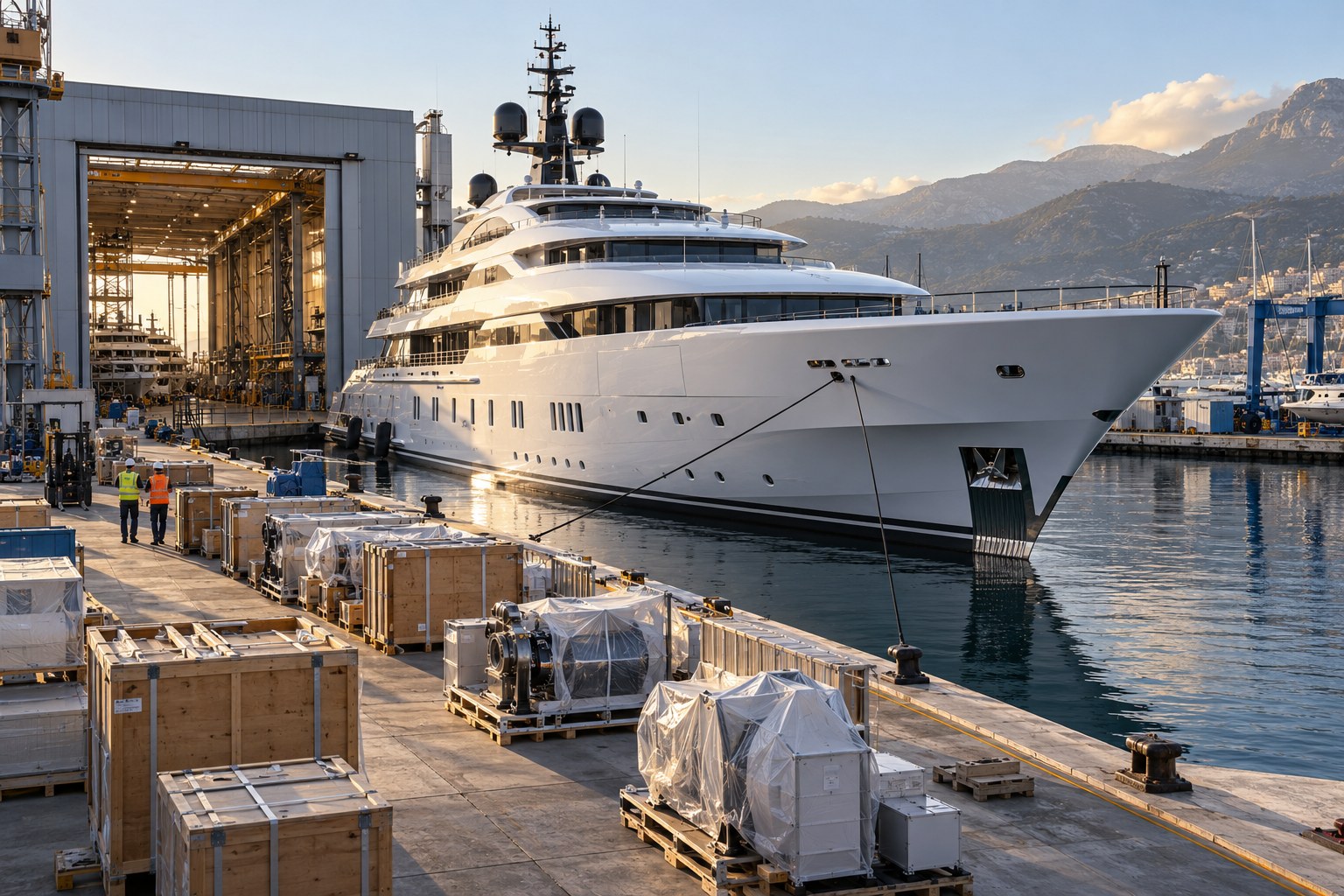
At launch, everyone looks at the yacht. I would also look at what remains out of sight: orders, journeys, storage, deliveries and the people who made that moment possible.
A superyacht is bespoke. Its supply chain deserves the same attention. Risk does not wait for the vessel to touch the water: it can start inside a crate, in a warehouse or with an unclear instruction.
A component has a price. Its absence can have other costs.
Consider a bespoke glass panel. Its value is only part of the picture. How long would replacement take? Which tasks depend on its installation? What alternatives exist if it arrives damaged?
This is an operational question before it becomes an insurance question. In its broader maritime analysis, Allianz Commercial’s Safety and Shipping Review 2026 highlights long lead times for parts and repairs and limited shipyard capacity among pressures on costs. The report is not a superyacht-specific dataset; it provides useful context for thinking about project dependencies. [1]
My view is that ranking components only by purchase price can obscure their operational importance. A relatively small item deserves attention if it cannot be replaced within the project timetable.
One supply chain, many handovers. Who connects them?
The supplier prepares the goods. A carrier collects them. A warehouse holds them. The yard receives them. An installer fits them. Each handover brings different people, records and working conditions.
“The supplier takes care of it” is not a responsibility map. Before dispatch, I would want five questions answered:
- Who arranges transport, packaging, unloading and handling?
- When and how is each custody handover recorded?
- Where can the goods be stored, and for how long?
- Who checks condition and conformity on receipt?
- Who must be involved if an issue is identified?
The answers must connect the contracts with actual operations, with specialist input where needed. A reassuring phone call is no substitute for a documented picture.
“It is insured” is where the question begins.
Insured by whom? For which activity, value, location and stage of work?
The market distinguishes different exposures and covers. Chubb’s US marine overview, for example, lists ship repairers’ liability, terminal operators’ liability and vessel builder’s risk. This illustrates the range of exposures; it is neither a product recommendation nor confirmation of terms available in Italy. [2]
For a specific project, goods protection, operator liabilities and the yard’s programme need to be compared. Damage to a component, damage to existing property aboard, rework costs and delay consequences are separate questions. They should not be assumed to fall within the same policy.
The panel arrives broken: an illustration, not a real claim.
Imagine that the glass arrives damaged just before installation. The yard needs to establish what happened, the supplier needs to assess replacement, and the project manager needs to reorganise the work.
Useful evidence includes the order, packaging instructions, transport documents, photographs, handover records and contract terms. Cover is examined against those facts, without prejudging who must pay.
There is also the next day to consider. Is there a temporary solution? Which work can continue? Who authorises urgent transport? How long will the new panel take? The issue extends beyond the price of the glass.
Metodo TARGA: start with a real project.
For this supply chain, I suggest starting with a defined case: a major supply, a sensitive transfer or a refit activity. TARGA Check can be the initial step in identifying priority checks.
- Map the journey: parties, locations, values, timing and custody.
- Identify dependencies: critical components, alternatives and related work.
- Compare operations, contracts and policy wording.
- Agree actions, assigned owners and review dates.
The intended output, agreed within the engagement, is a usable working basis: a handover map, missing information and priorities. The review can then deepen or become ongoing support according to the business’s needs.
Luxury is in the details. So is risk.
A yacht’s quality draws on many skills. Effective risk management requires those skills to connect on contracts, deliveries and insurance too.
My question for yards, suppliers, logistics operators and yacht managers is simple: which component would cause real difficulty if it failed to arrive tomorrow?
Start there. Before launch. Before the problem.
Sources and references
- https://commercial.allianz.com/news-and-insights/reports/shipping-safety.html
- https://www.chubb.com/us-en/business-insurance/marine-liability-insurance.html
General professional insight. Individual situations require a review of documents and specific circumstances.
Put these questions to work.
Start with your operations, contracts and policy wording.
Talk to Saverio ↗