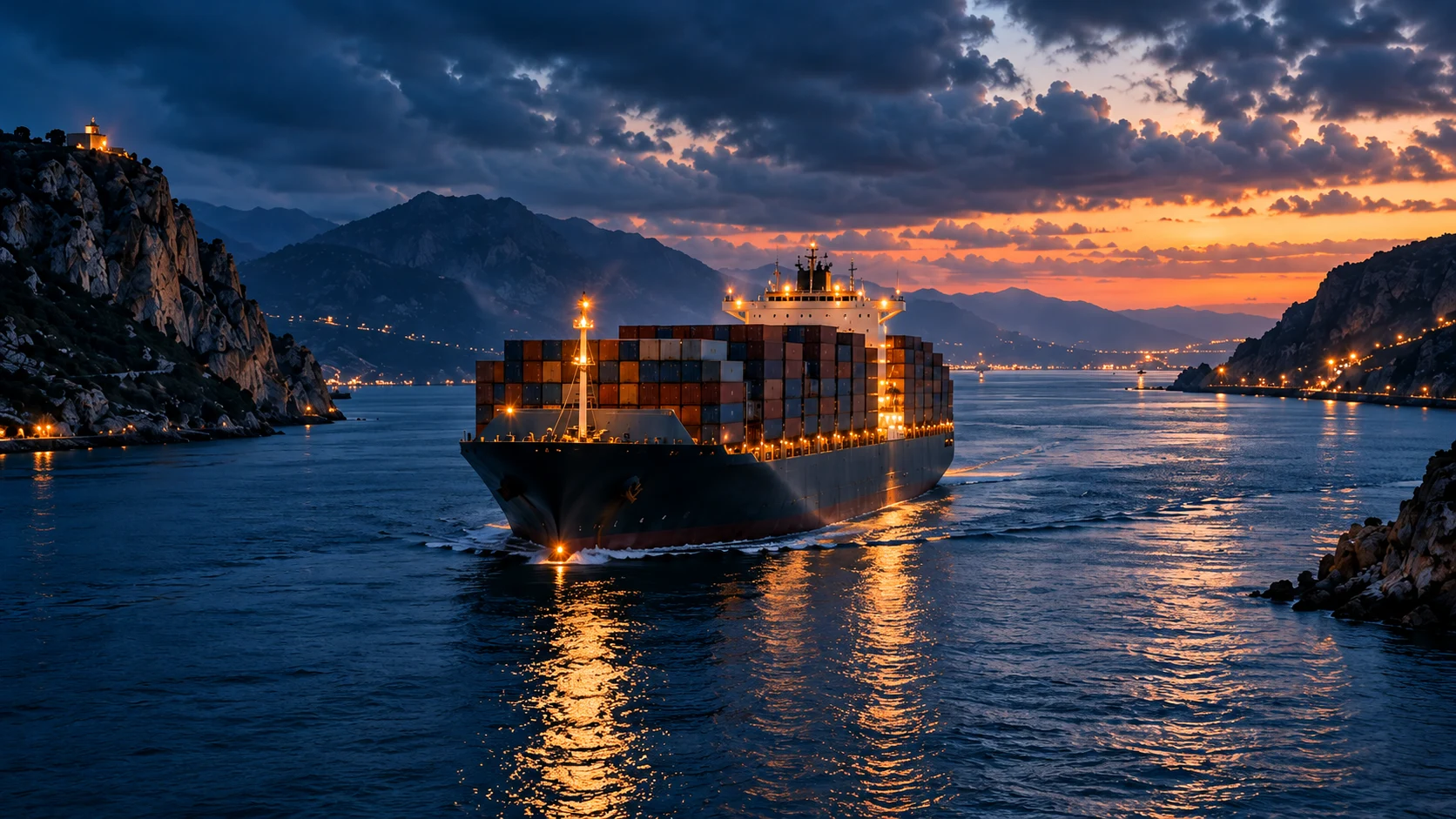
A drone approaches a container vessel. A frigate intercepts it. The ship continues. For businesses entrusting revenue, orders and continuity to maritime transport, a question remains: if things had gone wrong, who would have paid?
The event
Le Monde reported on 15 October that the CMA CGM Champs Elysées was threatened by a drone in the Bab el-Mandeb Strait on the night of 1 October 2026. The French frigate Languedoc intercepted it. This belongs in business meetings as well as news bulletins: exposure travels inside the containers. [1]
Reassurance is not a wording
“Don't worry, the goods are insured.” Against what? Along which route? With which exclusions, and until when? All risks sounds absolute, but it is subject to contractual boundaries. Institute Cargo Clauses (A) 2009 exclude the war risks specified in clause 6. Dedicated war cover and its actual operation must therefore be checked. [2]
We do not know the policies covering cargo on the vessel mentioned. It would be wrong to claim there were gaps on that voyage. The incident nevertheless raises a question for every shipment.
Goods intact. Business losses remain.
Consider production components arriving late, seasonal products missing their selling window or customers cancelling orders. These are hypothetical scenarios, illustrating the difference between protecting cargo and protecting a business's financial outcome.
Standard ICC (A) exclude loss, damage or expense caused by delay, subject to the specific exception in the wording. Institute War Clauses (Cargo) also contain a delay exclusion. Adding war cover does not insure every economic consequence of war. [2][3]
Saverio's perspective
My view is clear: transport insurance advice should begin with what actually happens to goods. Port, storage, transshipment, deviation and delivery. At each stage, establish who bears the risk, which cover applies, which notifications are required and which costs remain with the business.
That is the work I put at the centre of Metodo TARGA: connecting operations and contracts before a claim exposes their distance. Take a real shipment and ask your adviser: if it changes route tomorrow and arrives a month late, which losses remain ours? Request a written answer tied to the wording.
The premium is visible. A gap may only become apparent after a loss. Before the next cargo departs, begin that review.
Sources and references
- https://www.lemonde.fr/en/economy/article/2026/10/15/french-warship-shoots-drone-threatening-cma-cgm-container-ship-at-bab-el-mandeb_6758647_19.html
- https://assets.lloyds.com/media/dcb2ad19-4820-4b42-a5d0-0dcea17ef691/ICCA%201%201%2009%203.pdf
- https://www.if-insurance.com/globalassets/industrial/files/marine-cargo/institute-clauses/institute-war-clauses-cargo-2009.pdf
General professional insight. Individual situations require a review of documents and specific circumstances.
Let’s talk about your shipment.
Start with your operations, contracts and policy wording.
Talk to Saverio ↗